UHF RFID Loop Tags for Jewellery: Smarter Inventory Management
Managing jewellery inventory is very different from managing ordinary retail products. A jewellery store may have thousands of rings, earrings, pendants, bracelets, necklaces, and other valuable pieces in stock. Each item needs to be individually identified, tracked, counted, and reconciled regularly.
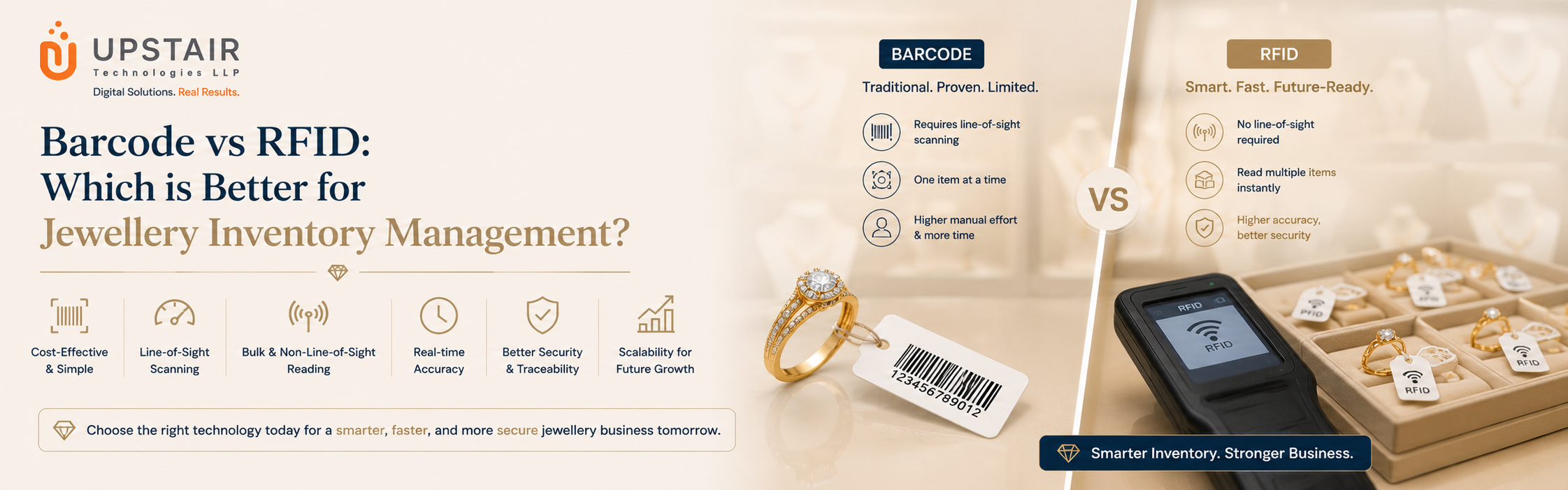
Traditional barcode-based stock counting requires employees to scan jewellery pieces one by one. For stores with large inventories, this can be a time-consuming process.
This is where UHF RFID Loop Tags can make a significant difference.
What Is a UHF RFID Jewellery Loop Tag?
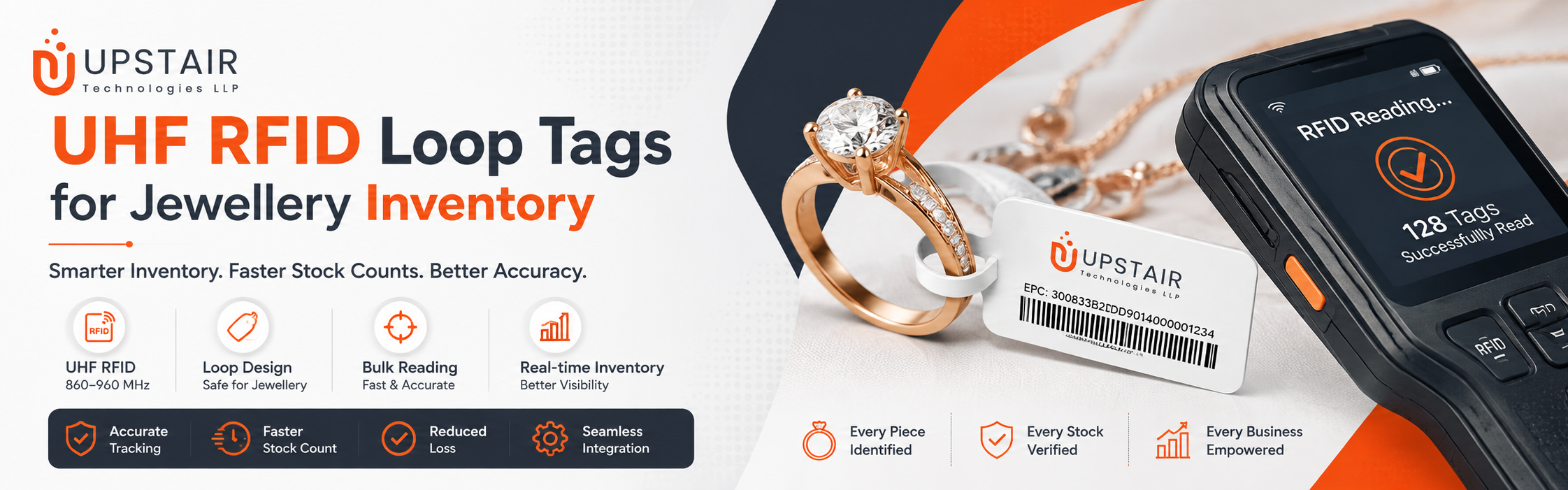
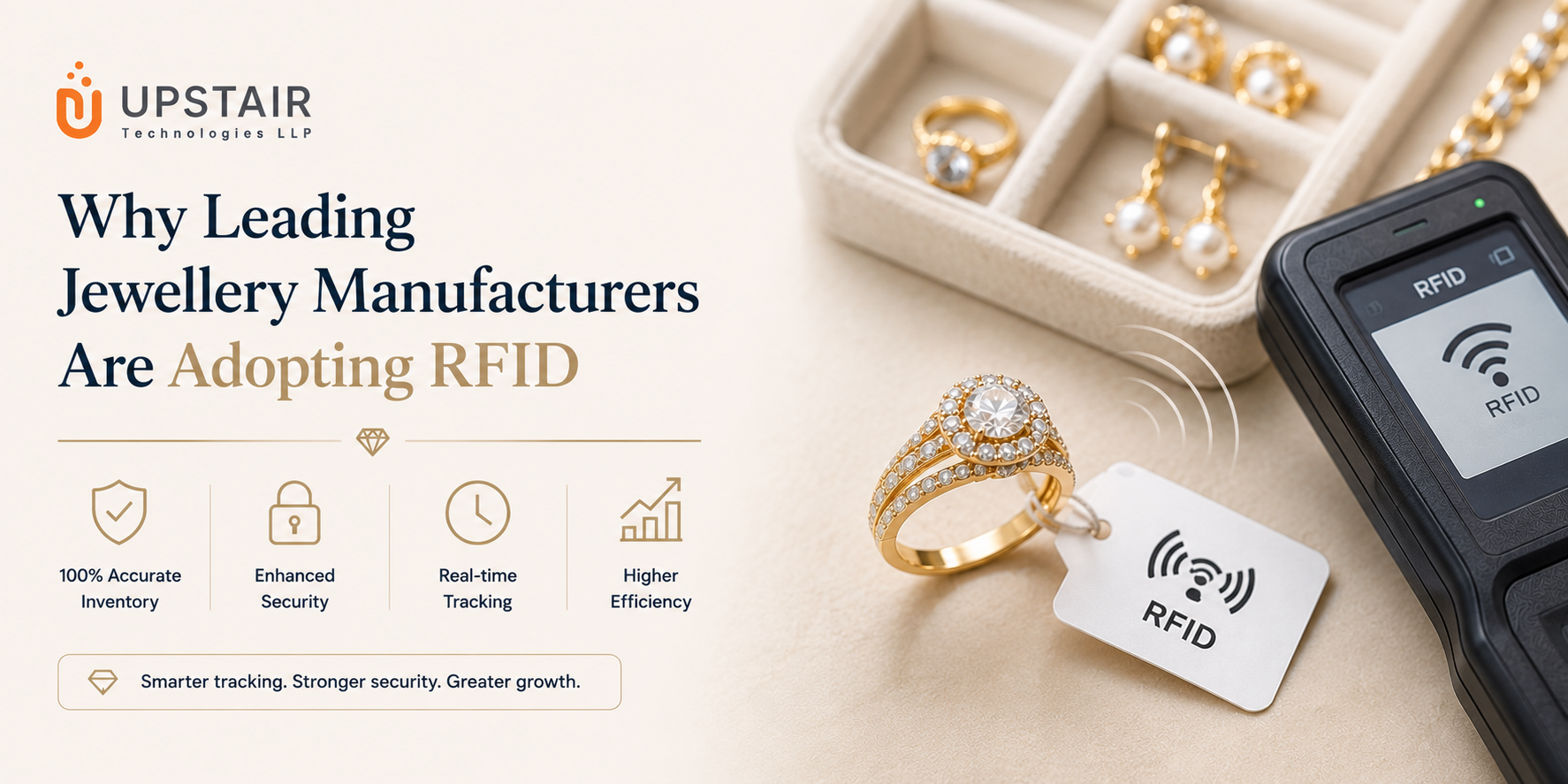
A UHF RFID jewellery loop tag is a specially designed RFID tag that can be attached to an individual jewellery piece using a small loop.
It typically operates in the UHF RFID frequency range of 860–960 MHz and can be read using compatible handheld or fixed RFID readers.
Unlike traditional adhesive labels, the loop design allows the tag to be attached without sticking the label directly onto the jewellery.
This makes it particularly suitable for:
- Rings
- Earrings
- Pendants
- Necklaces
- Bracelets
- Bangles
- Chains
- Other valuable jewellery pieces
Why UHF RFID Is Suitable for Jewellery Inventory
One of the biggest advantages of UHF RFID is its ability to identify multiple tagged items without scanning each tag individually.
With barcode inventory, an employee normally needs to locate the barcode and scan every jewellery piece.
With UHF RFID, a compatible reader can detect multiple RFID-tagged jewellery items within its reading area.
This can significantly simplify routine stock-counting operations.
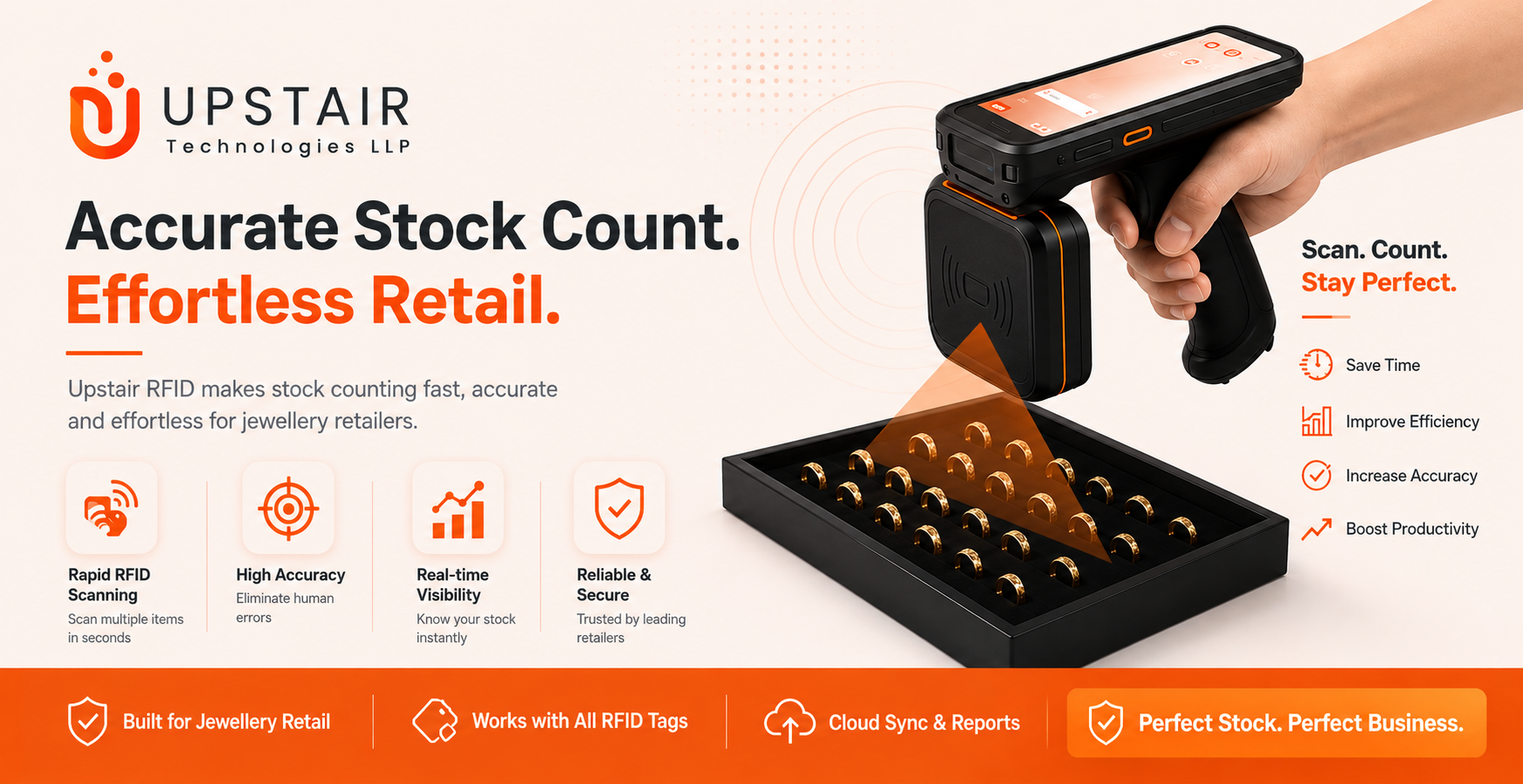
For example, instead of manually scanning every item in a jewellery tray, an employee can use an RFID handheld reader to quickly identify the tagged items and compare them with the expected inventory in the software.
Why the Loop Tag Format Works Well for Jewellery
Jewellery presents a unique challenge because tags need to be small and should not damage or interfere with the product.
The loop format provides several advantages.
No adhesive directly on jewellery: The loop can be attached around the jewellery piece without sticking the RFID label onto the product.
Compact design: Jewellery RFID loop tags can be designed to remain small enough for retail display.
Printable information: Depending on the tag design, the visible area can contain information such as SKU, barcode, product code, weight, price, or other identification details.
Individual identification: Every RFID tag can carry a unique electronic identifier that allows the software to distinguish one jewellery piece from another.
RFID Can Transform Daily Stock Counting
For jewellery businesses, inventory verification is particularly important because of the high value of each item.
Many stores perform stock counts daily, during shift changes, or at opening and closing.
RFID can help create a much faster workflow:
RFID Tag → Jewellery Item → RFID Reader → Inventory Software → Stock Reconciliation
Employees can scan a tray, counter, showcase, or inventory area using an RFID reader.
The system can then compare the RFID tags detected by the reader against the inventory expected at that location.
The software can immediately identify:
- Matched Items – Items expected and successfully detected.
- Missing Items – Items expected in the location but not detected.
- Unexpected Items – Items detected but assigned to another location or not expected in the current inventory.
This transforms stock counting from a simple scanning activity into a structured inventory audit process.
RFID Beyond Stock Counting
UHF RFID can support several jewellery inventory processes beyond daily stock counts.
Stock Inward
When new jewellery enters a store or warehouse, an RFID tag can be associated with the individual inventory record.
Store and Warehouse Transfers
RFID can help verify which jewellery pieces are moving between locations.
Showcase and Tray Management
Jewellery can be associated with particular counters, showcases, trays, stores, or warehouses.
Inventory Audits
RFID can make periodic physical inventory verification faster and easier to reconcile with ERP or POS stock.
Item Search
RFID handheld readers can help employees locate a particular tagged jewellery item within a store or inventory area.
Loss and Discrepancy Identification
Frequent RFID stock counts can help businesses identify inventory discrepancies earlier instead of waiting for monthly or annual audits.
RFID Chip Alone Does Not Determine Performance
When selecting an RFID tag, businesses sometimes focus only on the RFID chip.
Modern UHF chips such as the Impinj M730, M750, and similar UHF RFID ICs can provide strong capabilities for inventory applications.
However, the chip is only one part of the tag.
For jewellery, antenna and inlay design are extremely important.
Jewellery is made from materials such as gold, silver, platinum, and other metals. Metal can significantly affect RF performance.
Tag orientation, distance from the jewellery, jewellery size, tray construction, item density, reader power, and surrounding materials can all influence RFID readability.
Therefore, two tags using the same RFID chip may perform very differently in an actual jewellery environment.
What to Look for When Selecting a Jewellery RFID Loop Tag
A jewellery business evaluating RFID loop tags should consider:
- UHF RFID support in the appropriate regional frequency range
- EPC Gen2 / ISO 18000-63 compatibility
- Compact jewellery-friendly loop design
- Antenna optimized for use around jewellery and metal
- Reliable performance when multiple jewellery pieces are placed close together
- Printable surface for barcode and product information
- Compatibility with RFID printers and encoders
- Compatibility with handheld and fixed RFID readers
- Suitable attachment strength
- Tamper-evident functionality where required
- Consistent performance across rings, earrings, necklaces, bracelets, and other product types
Most importantly, tags should be tested using actual jewellery, actual trays, actual showcases, and the RFID readers that will be used in production.
RFID Should Be Integrated With Jewellery ERP or POS
RFID hardware alone does not solve inventory management.
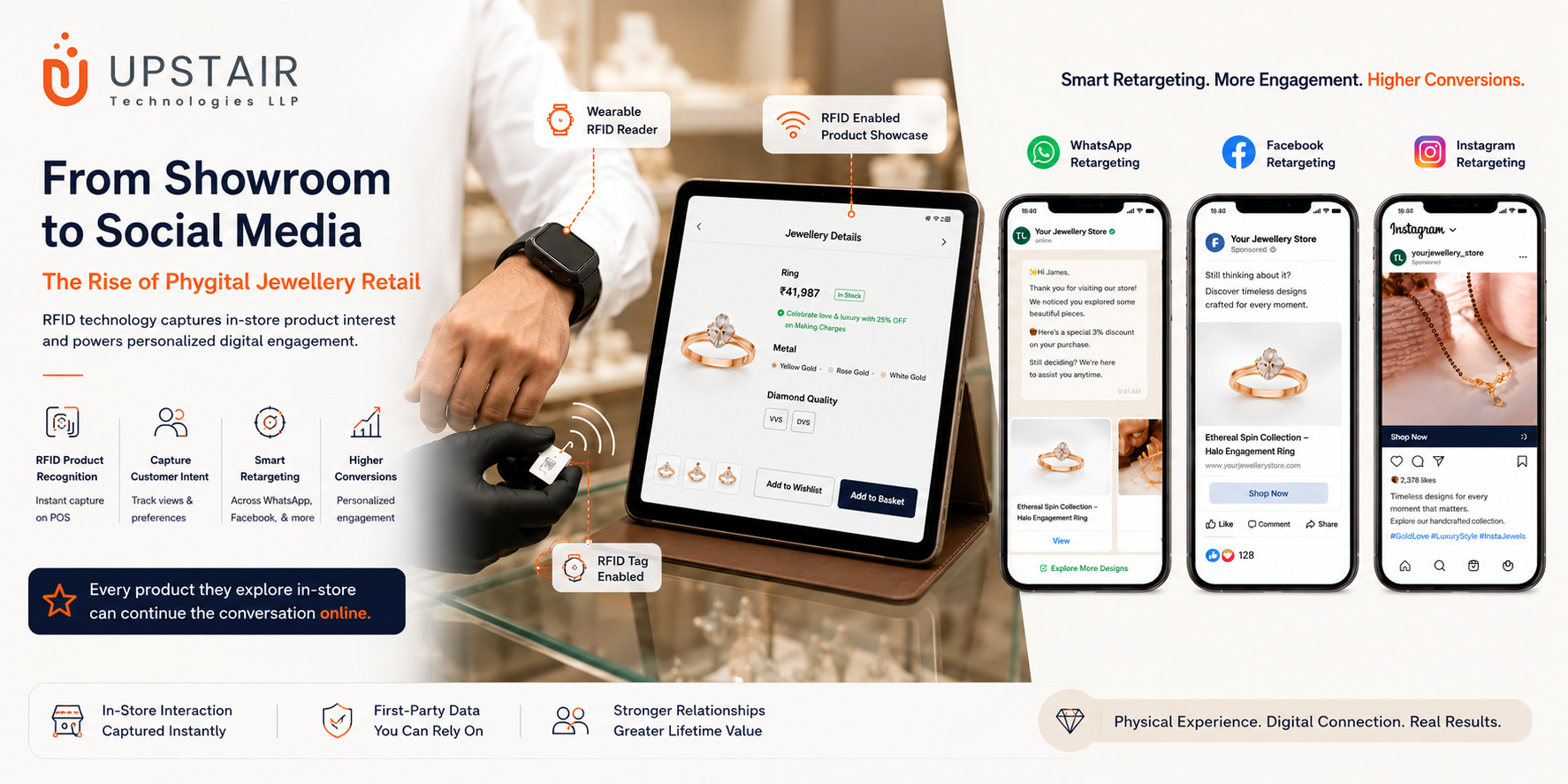
The real value comes when RFID is integrated with the jewellery company’s ERP, POS, inventory, warehouse, and store-management systems.
Each RFID EPC can be mapped to an individual jewellery inventory record.
For example:
RFID EPC → SKU → Jewellery Piece → Store → Showcase/Tray → Inventory Status
Once this relationship is established, RFID can become part of the complete jewellery inventory lifecycle—from inward and transfers to daily stock counting and sales.
UHF RFID Loop Tags Can Make Jewellery Inventory Smarter
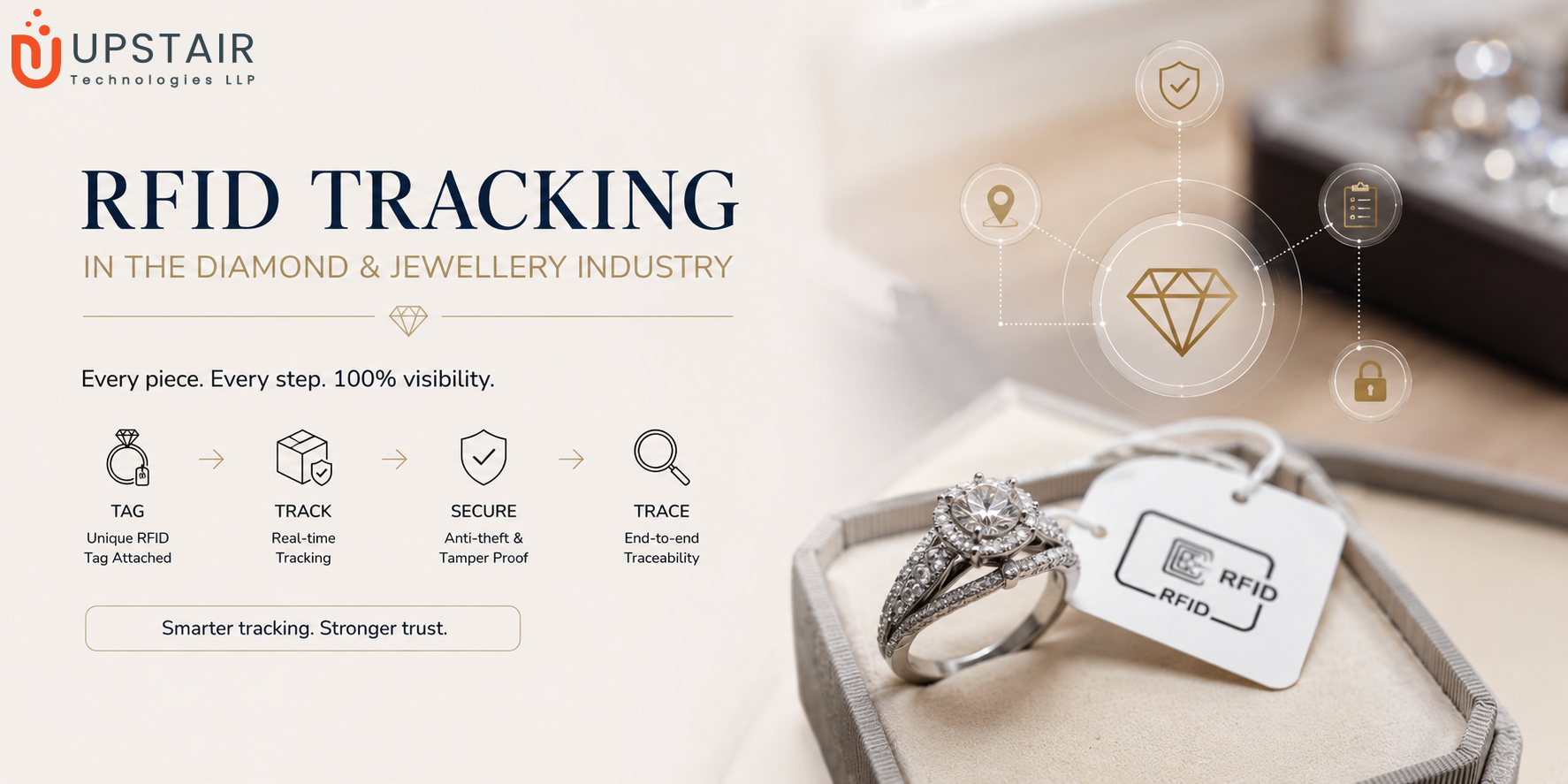
For jewellery retailers, manufacturers, wholesalers, and multi-store brands, UHF RFID loop tags provide a practical way to give every jewellery piece a digitally readable identity.
Their biggest advantage is not simply replacing a barcode.
The real opportunity is enabling faster stock counting, better inventory visibility, easier item identification, improved reconciliation, and more frequent inventory audits.
When the right UHF RFID loop tag, reader hardware, and jewellery inventory software work together, a stock-counting process that traditionally requires significant manual effort can become much faster and more structured.
For jewellery businesses looking to modernize inventory operations, UHF RFID loop tags are one of the most practical technologies to evaluate.